Closing the Digital Divide: Fixing Broadband in Aging Apartment Buildings
The digital divide in the U.S. is wider than official estimates suggest. While the FCC reports that 19.6 million Americans lack access to reliable broadband, BroadbandNow puts the number closer to 26 million. Despite government investment—including the $42.5 billion BEAD
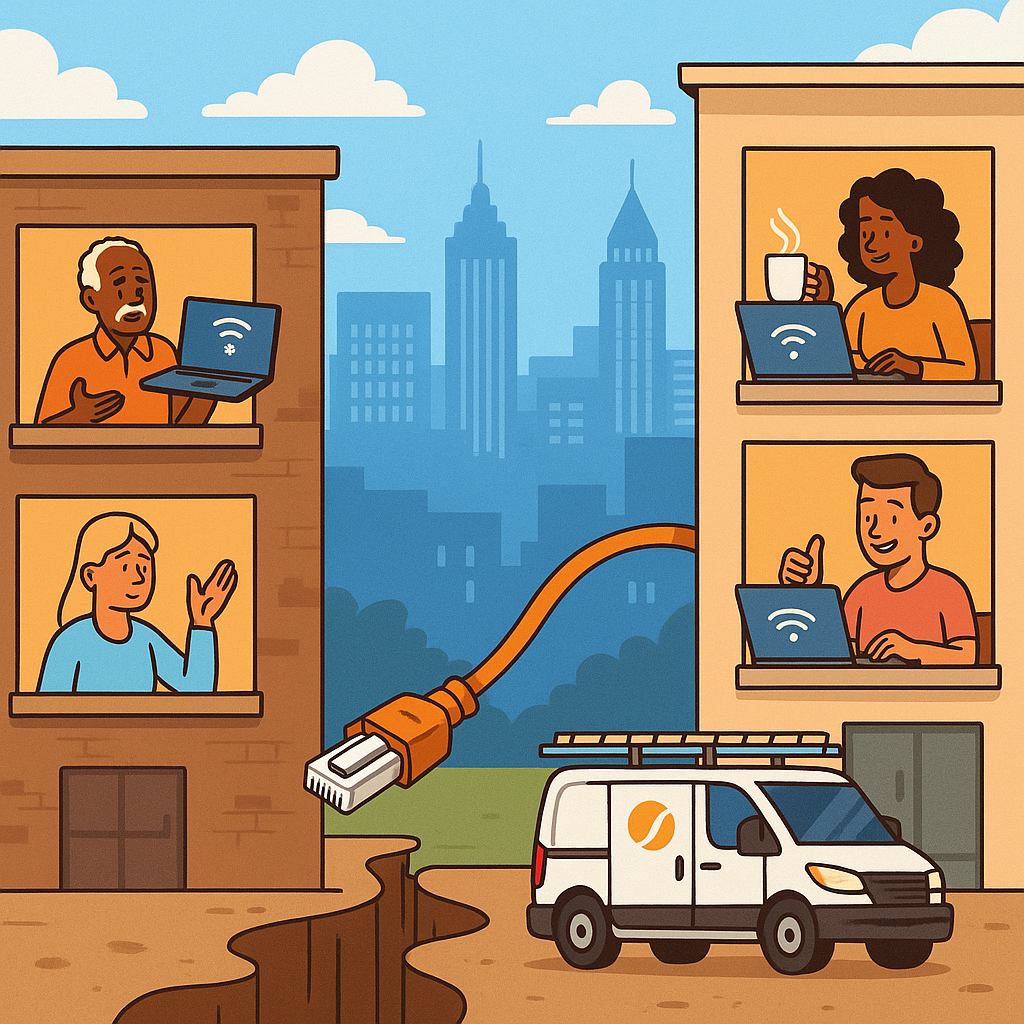
Program—millions remain underserved, especially renters in older apartment buildings. Nearly a third of Americans live in multi-dwelling units (MDUs), where outdated infrastructure often prevents high-speed connections. Retrofitting these “brownfield” buildings is slow, costly, and disruptive. To make matters worse, bulk billing agreements between landlords and internet providers often lock tenants into one ISP, limiting competition and choice. The FCC has proposed banning such deals, sparking debate over affordability and access.
One promising solution is fiber access extension technology. Instead of replacing entire networks, operators can use existing coaxial cabling inside buildings to deliver gigabit speeds at a fraction of the cost of full fiber upgrades. Standards like MoCA Access allow operators to bring fiber to a building’s edge, then extend it over coax for the last stretch—unlocking high- speed service for tenants in older complexes.
For consumers, the delivery method matters less than the result: fast, reliable connectivity. With smart use of extension technologies, operators can finally close the gap for millions stuck in broadband’s slow lane.