Luxury Home Automation Meets Interior Design: Where Technology Becomes Beautiful

In today’s luxury home automation market, technology and interior design are no longer competing priorities. Instead, they’re converging to shape how homeowners experience their living spaces. At this intersection, technology integrators and interior designers are collaborating in new ways to deliver homes that balance beauty, comfort, and performance in perfect harmony.
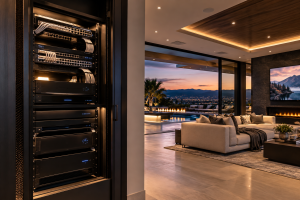
This growing trend is evident across top-tier smart home projects, including many Home of the Year Award entries. Integrators frequently face the challenge of installing sophisticated systems in architecturally stunning homes without disrupting the aesthetic vision. Increasingly, the solutions—such as framed TVs, architectural speakers, linear lighting, motorized shading, and hidden home technology—are becoming part of the design language rather than obstacles to it.
Building the Foundation for Better Smart Home Design
According to interior designer Toni Sabatino, who works closely with the CEDIA community, exceptional interiors rely just as much on usability as visual appeal.
“Good interior design in this industry has to have a user experience to go with the aesthetic.”
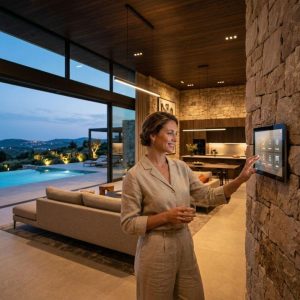
In high-end smart home design, a seamless user experience is essential. Technology should enhance how people live, not complicate it. That’s why successful projects begin with understanding how homeowners move, gather, relax, and entertain within their spaces.
Sabatino emphasizes that industry events like CEDIA Expo/CIX help bridge the awareness gap between designers and integrators. These events showcase the latest in luxury home technology, allowing designers to confidently discuss how smart systems can enhance daily living.
She notes that some integrators make the mistake of leading with technology specs instead of desired lifestyle outcomes. Conversations should start with comfort, security, entertainment, and convenience—then move into the infrastructure that makes those experiences possible.
The Designer–Integrator Relationship in Luxury Smart Homes
Despite increasing collaboration, there’s still a misconception that interior design and home technology integration are at odds. That narrative occasionally surfaces in media coverage of ultra-luxury homes, claiming smart systems are overly complex or poorly integrated into design.
However, these criticisms often overlook the integration community’s progress toward simpler, design-conscious systems. Sabatino believes the solution lies in earlier and clearer collaboration:
- Define Responsibilities Early: “If we decide who’s responsible to whom and for what, we won’t be backtracking or having mistakes.”
- Prioritize Spatial Harmony: She recalls a project where asymmetrically placed on-wall speakers disrupted a wall intended for artwork. The solution—switching to invisible speakers and re-centering the art—allowed technology and design to coexist beautifully.
When Technology Disappears—and When It Becomes Design
Today’s approach to custom home automation isn’t just about hiding hardware. It’s about intentionally choosing when technology should disappear and when it should make a bold design statement. This philosophy is especially visible in architectural audio.
Caitlin Stewart, Residential Sales Director at Leon Speakers, says homeowners no longer want to sacrifice aesthetics for performance:
“We believe that no one should have to sacrifice form for function, or aesthetics for performance. There is a way to tastefully blend both.”
Leon’s design-first philosophy draws from its artistic roots, offering customizable finishes, materials, and colors that allow AV products to feel curated rather than imposed. Giving clients fixture-level control over AV elements lets technology truly complement the interior design.
Framed TVs and Design-Forward Displays
Few products represent the fusion of interior design and home technology better than Samsung’s The Frame TV and the newer The Frame Pro. Originally launched nearly a decade ago, The Frame was designed to look like artwork when not in use—a television that blends naturally into design-led spaces.
Feedback from designers and integrators heavily influenced modern improvements in smart home media rooms, leading to better mounting systems, custom bezel options, cable management, and glare reduction. Matte displays and anti-reflection technology help screens support a room’s ambiance rather than dominate it.
Speaking the Same Language: Collaboration Is Key
Even as manufacturers develop more design-forward smart home products, integrators remain responsible for delivering seamless, luxury-level results. Sabatino says success depends on managing expectations and presenting a unified, solutions-oriented front.
Mutual respect between disciplines is essential. Manufacturers are reinforcing this collaborative model by working directly with architects and designers from day one to ensure function and aesthetics are both respected.
The Future of Luxury Home Automation
The shared vision for next-generation residential smart home integration is clear: systems that are intuitive, personalized, visually thoughtful, and reliable.
Modern premium homeowners want:
- Flexible materials, colors, and custom finishes.
- Technology that blends seamlessly into the architecture.
- Simple, user-friendly control interfaces.
- Long-term value without rapid technology obsolescence.
As the worlds of interior design and home automation continue to merge, the most successful luxury homes will be those where technology doesn’t just power the space—it belongs in it.